
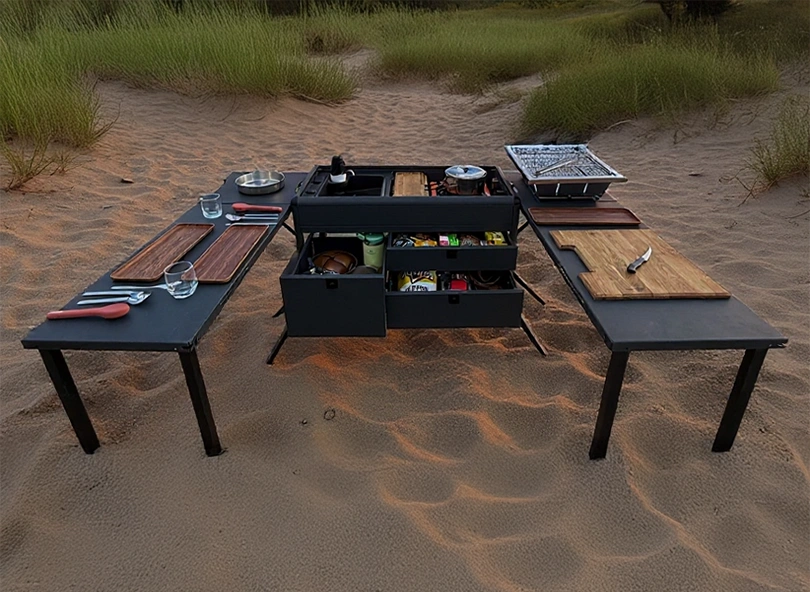
Material Quality Is the Foundation of Performance
Outdoor equipment must endure harsh environmental conditions. Whether you’re camping, overlanding, or living the tiny house lifestyle, your gear must withstand moisture, mud, impact, temperature changes, and long-term use. The key factor that determines this resilience is material selection. In this article, we break down the most commonly used materials in the outdoor world, their advantages, and why they matter.
1. Stainless Steel: Heavy but Durable
Stainless steel is widely used in outdoor equipment, especially for structural frames and high-impact components.
Advantages:
- Resistant to corrosion and wear
- Can handle heavy loads
- Long lifespan
Disadvantages:
- Heavier than other materials
- Can be difficult to carry over long distances
2. Aluminum: The Balance Between Weight and Strength
7000 series aluminum, also used in aerospace, is a top choice for portable outdoor systems.
Advantages:
- Very lightweight
- Durable against impact and rust
- Easy to carry and assemble
Disadvantages:
- High-quality grades can be more expensive
3. Solid Wood: Natural and Antibacterial Surface
Hardwoods like walnut are commonly used for kitchen counters and tabletops in outdoor setups.
Advantages:
- Natural, warm aesthetic
- Naturally antibacterial surface
- Becomes water-resistant when properly sealed and oiled
Disadvantages:
- Requires regular maintenance
- Needs protection in humid or rainy environments
4. Plastic & Composites: Affordable but Limited
Some budget-friendly outdoor products use plastic or composite materials, especially for secondary accessories.
Advantages:
- Lightweight and cost-effective
- Suitable for mass production
Disadvantages:
- Less durable and prone to wear
- Not ideal for long-term outdoor use
Where Should Each Material Be Used?
Material
- Stainless Steel
- Aluminum
- Solid Wood
- Plastic/Composites
Suggested Use Area
- Structural frames, high-load parts
- Portable bodies, modular systems
- Countertops, decorative elements
- Accessories, temporary use items
Conclusion: The Right Material Choice Shapes Your Experience
Choosing the right material isn’t just about durability—it directly impacts comfort, usability, and long-term satisfaction. Every terrain and need is different, and understanding what to expect from each material helps you make better gear decisions.
✨ Looking for innovative outdoor systems that combine multiple materials in harmony? Explore the modular setups designed by Control Overland.
Your Kitchen. Anywhere. Without Limits.